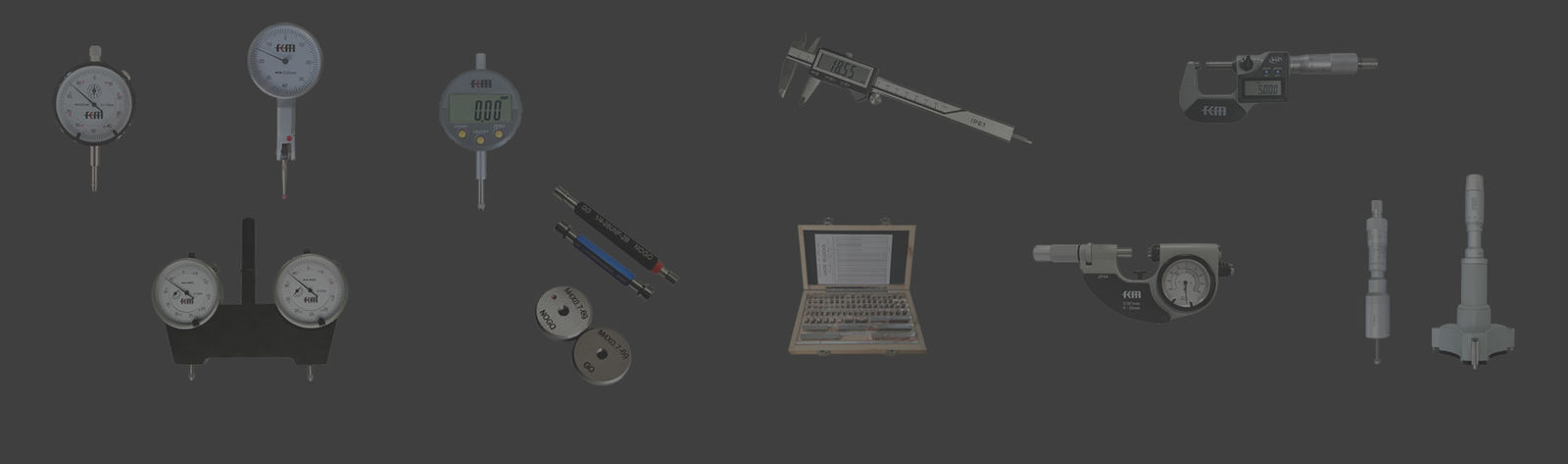
Calipers, as the most fundamental and frequently used length measurement tool in mechanical manufacturing, quality inspection, and scientific research experiments, their measurement accuracy directly affects the qualification rate of product dimensions and the stability of the process. To ensure the accuracy and reliability of the measurement values, the national metrological technical specifications have clearly stipulated the calibration cycle for calipers. At the same time, daily maintenance is equally crucial for extending their service life and maintaining the stability of accuracy. This article will combine the current verification procedures and on-site practical experience to systematically analyze the legal requirements for the calibration cycle of calipers and the scientific maintenance methods.

1. Frequency of use is the core variable determining the calibration interval. Calipers that are used daily for more than 8 hours have a significantly higher wear rate of the sliding parts compared to those used less frequently. The indication repeatability is prone to deteriorate within 3 months, and the calibration frequency needs to be increased.
2. The environmental temperature and humidity directly affect the thermal expansion of materials and the risk of rusting. The standard calibration environment requires a temperature of (20 ± 5) °C and a relative humidity of no more than 80%. If the equipment is used in an environment with large temperature fluctuations or corrosive conditions for an extended period, calibration should be arranged in advance even if it is not yet one year since the last calibration.
3. The characteristics of the measured object also need to be considered. Frequent measurements on high-hardness, rough-surfaced, or workpieces with burrs will accelerate the wear of the measuring jaws' cutting edges, leading to zero drift or an increase in contact errors. In such cases, it is recommended to conduct a functional check once every quarter.
1. After each use, the measuring surface, scale, and slide rail should be wiped immediately with a clean soft cloth or lint-free cotton swab, dipped in a small amount of industrial alcohol or neutral cleaning agent, to thoroughly remove chips, oil stains, and sweat. It is strictly prohibited to use hard tools such as metal brushes or sandpaper for scraping to avoid damaging the reference surface.
2. After cleaning and drying, apply a thin layer of anti-rust oil (such as No. 20 machine oil or special anti-rust grease for measuring tools) to the contact surfaces of the sliding guide rail and the measuring claws. Then, gently wipe the surface with a dry cloth until it becomes slightly moist and free of any liquid. This operation can effectively prevent air and moisture from coming into contact, thus avoiding oxidation and rusting.
3. When storing, the caliper should be fully closed or placed in a dedicated protective box to prevent it from being mixed with other metal tools and getting bumped. The storage environment should be cool and dry, away from heat sources, strong magnetic fields and chemical corrosive gases. The ideal temperature and humidity range is 15-25℃ and 40%-60% relative humidity.
III. Key points for lubrication and functional maintenance of the sliding mechanism:
1. The smoothness of the sliding pair is directly related to the measurement repeatability accuracy. It is recommended to check the sliding resistance once a month: gently pushing the cursor should be smooth without any sticking, and after releasing, it should slowly slide down by its own weight. If there is any sticking or jumping, the old oil stains should be removed and a small amount of low-viscosity lubricating oil (such as ISO VG32) should be refilled.
2. For digital calipers, special attention should be paid to the battery condition and waterproof performance. Insufficient battery power can cause display drift or data loss; non-IP-rated models must not come into contact with liquids. When not in use for a long time, the battery should be removed to prevent electrolyte leakage from corroding the circuit board.
3. Conduct zero position self-checks regularly: After closing the external measuring jaws, visually check if the zero line of the vernier aligns with the zero line of the main scale (mechanical type), or use the "ZERO" key to reset and measure the standard gauge block to verify the indication error. If any abnormalities are found, send it for repair immediately; do not use it forcibly.
1.. Before sending for calibration, a basic cleaning and visual inspection must be completed to ensure there are no obvious damages, rust spots or deformations. Calibration laboratories usually reject instruments with severe oil stains or structural damage to prevent contamination of the standard equipment.
2. Establish a complete life-cycle archive for the caliper, recording the purchase date, the first calibration, the results of each subsequent calibration (including correction values), the using department, and any abnormal events. This archive serves as an important reference for tracing the sources of measurement uncertainty and formulating personalized calibration strategies.
3. Internal enterprises must be equipped with traceable standard gauges (covering at least the commonly used measurement segments), and calibration should be carried out by certified metrologists in accordance with JJG 30 regulations. For external institutions, they should choose third-party institutions with CNAS or CMA qualifications to ensure that the calibration certificates have legal validity.
Here are the questions and answers you might be interested in:
Q: Do the newly purchased calipers need to be calibrated immediately?
A: Yes. Although the product has passed the factory inspection before leaving the factory, vibrations or temperature changes during transportation may cause accuracy deviations. According to the JJG 30 regulation, all calipers must undergo their first calibration before their first use, and can only be used for formal measurements after passing the test.
Q: Does the caliper calibration need to be sent to an external institution?
A: Not necessarily. Enterprises that have the corresponding measurement standards, environmental conditions, and certified personnel can conduct internal calibration (in-house calibration), but they need to establish a complete value traceability chain and regularly undergo external comparison verification. Units without the capability for in-house calibration must entrust a legally authorized metrological technical institution.
Q: Does the digital caliper have a shorter calibration cycle than the mechanical caliper?
A: Not necessarily. Both have a legal period of no more than one year. However, digital calipers contain electronic components and are more sensitive to humidity and static electricity. In humid or highly disturbed environments, they may need to be checked more frequently. While mechanical calipers are more susceptible to physical wear and tear. The specific period should be assessed based on the actual usage conditions.
Q: Can the caliper be used even if it is slightly rusty?
A: It is not recommended. Rusting will damage the flatness of the measurement surface, causing the contact points to shift. Even if the reading seems normal, it actually introduces systematic errors. Minor surface rust can be lightly polished with extremely fine metallographic sandpaper (such as 2000 mesh or higher) combined with kerosene. However, after the treatment, the accuracy must be reconfirmed through calibration.
Although calipers have a simple structure, they are indispensable "eyes" in the precision manufacturing system. By strictly following the legal calibration cycle and conducting scientific and meticulous daily maintenance, it is possible to ensure their long-term stable output of reliable measurement data. Incorporating calibration and maintenance into standardized operation procedures is not only a compliance requirement but also a fundamental guarantee for improving product quality and production efficiency.