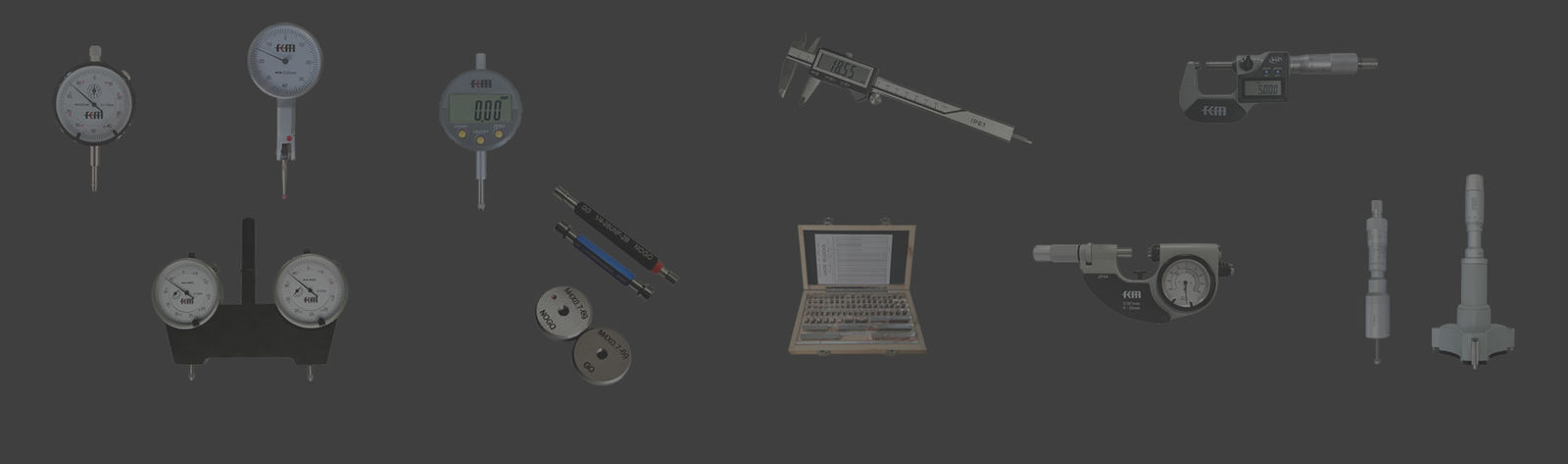
Thread Gauges: Essential Tools for Precision Thread Inspection
In manufacturing processes involving threaded components—such as nuts, bolts, and screws—precision is essential. Thread gauges are vital tools used to ensure that threaded parts fit seamlessly and perform reliably. Industries like automotive, aerospace, and industrial machining rely on these instruments to meet stringent quality standards and guarantee component interoperability.

What Is a Thread Plug Gage?
A thread plug gage is used to inspect internal threads in components such as pipes and molds, verifying that they conform to design specifications. It is designed to be inserted into a threaded hole to check whether the internal diameter and thread pitch fall within acceptable limits. This type of gage typically consists of two parts: the GO end and the NO-GO end. The GO end must screw completely into the internal thread, confirming that the thread meets the minimum material condition. In contrast, the NO-GO end should not screw in beyond a few turns, ensuring the thread has not exceeded maximum allowable dimensions.
What Is a Thread Ring Gage?
A thread ring gage is a precision inspection tool used to check the external threads of components such as screws, bolts, and threaded rods. Similar in function to the plug gage, it is specifically designed for parts with external threading. The GO ring gage must screw fully onto the external thread, verifying that it meets the required specifications. The NO-GO ring gage, however, should not screw on completely—indicating that the thread is oversized and outside the acceptable tolerance range.
What Do "Go" and "No-Go" Mean?
"Go" and "No-Go" refer to the two ends of a precision thread gauge used to assess whether a threaded component meets specified dimensional tolerances. The Go gauge checks the minimum material condition by screwing completely into or onto the thread—confirming the part is not too small or undersized. The No-Go gauge, on the other hand, should not engage more than two turns, verifying that the part does not exceed the maximum material condition and is not oversized. This Go/No-Go system offers a fast, reliable method for thread inspection, enabling manufacturers to maintain consistent quality and interchangeability.
Conclusion
Though often small in size, thread gauges play an indispensable role in ensuring the accuracy and reliability of threaded components across numerous industries. From identifying thread types to verifying compliance with international standards, proper use, maintenance, and inspection of these gauges are fundamental to quality assurance. By adopting best practices and selecting the correct gauges for each application, manufacturers can minimize downtime, prevent costly rework, and ensure every threaded connection performs as intended.